New Zealand's Premier Gold & Silver Dealer — Shipping Fast to Sydney, Melbourne, and Across Australia


'%3e%3cpath%20d='M35.9662%2018.6756C35.9662%2028.4318%2028.0577%2036.4142%2018.2276%2036.4142C8.47382%2036.4142%200.491455%2028.4318%200.491455%2018.6756C0.491455%208.84547%208.47382%200.937012%2018.2276%200.937012C28.0577%200.937012%2035.9662%208.84547%2035.9662%2018.6756Z'%20fill='%234E4E4E'/%3e%3cpath%20d='M28.5611%2013.6174C28.3197%2012.7144%2027.6084%2012.003%2026.7052%2011.7616C25.0681%2011.323%2018.5034%2011.323%2018.5034%2011.323C18.5034%2011.323%2011.9389%2011.323%2010.3018%2011.7616C9.39859%2012.003%208.68734%2012.7144%208.44594%2013.6174C8.0072%2015.2547%208.0072%2018.6703%208.0072%2018.6703C8.0072%2018.6703%208.0072%2022.086%208.44594%2023.7231C8.68734%2024.6262%209.39859%2025.3378%2010.3018%2025.579C11.9389%2026.0177%2018.5034%2026.0177%2018.5034%2026.0177C18.5034%2026.0177%2025.0681%2026.0177%2026.7052%2025.579C27.6084%2025.3378%2028.3197%2024.6262%2028.5611%2023.7231C28.9998%2022.086%2028.9998%2018.6703%2028.9998%2018.6703C28.9998%2018.6703%2028.9998%2015.2547%2028.5611%2013.6174Z'%20fill='%23E2D0A9'/%3e%3cpath%20d='M16.0072%2021.323L21.0072%2018.3232L16.0072%2015.323V21.323Z'%20fill='%234E4E4E'/%3e%3c/g%3e%3cdefs%3e%3cclipPath%20id='clip0_1338_5546'%3e%3crect%20width='37'%20height='37'%20fill='white'%20transform='translate(0.00720215%200.322998)'/%3e%3c/clipPath%3e%3c/defs%3e%3c/svg%3e)
;}%3c/style%3e%3cclipPath%20id='b'%3e%3crect%20class='c'%20width='37'%20height='37'/%3e%3c/clipPath%3e%3c/defs%3e%3cg%20class='f'%3e%3cpath%20class='d'%20d='M36.23,18.35c0,9.75-7.91,17.74-17.74,17.74S.75,28.11.75,18.35,8.73.61,18.49.61s17.74,7.91,17.74,17.74Z'/%3e%3cpath%20class='e'%20d='M25.53,12.76c-2-.43-3.49-2.11-3.68-4.15v-.43h-3.36v13.35c0,1.56-1.28,2.82-2.84,2.82-.88,0-1.71-.42-2.24-1.12h0s0,0,0,0c-.94-1.24-.7-3.02.54-3.96.73-.56,1.69-.72,2.57-.44v-3.42c-3.38-.47-6.5,1.9-6.97,5.28-.26,1.89.37,3.8,1.7,5.17,2.39,2.44,6.3,2.49,8.74.1,1.19-1.16,1.86-2.76,1.86-4.42v-6.82c1.36.97,2.99,1.49,4.66,1.49v-3.34c-.33,0-.66-.03-.98-.1Z'/%3e%3c/g%3e%3c/svg%3e)
'%3e%3cpath%20fill-rule='evenodd'%20clip-rule='evenodd'%20d='M36.0997%2018.6758C36.0997%2028.4296%2028.1913%2036.4144%2018.3611%2036.4144C8.53345%2036.4144%200.625%2028.4296%200.625%2018.6758C0.625%208.84571%208.53345%200.937256%2018.3611%200.937256C28.1913%200.937256%2036.0997%208.84571%2036.0997%2018.6758Z'%20fill='%234E4E4E'/%3e%3cpath%20fill-rule='evenodd'%20clip-rule='evenodd'%20d='M22.5741%2010.25H19.9158C17.6984%2010.25%2016.0699%2012.0978%2016.0699%2014.4629V16.089H13.2638V18.8237H16.0699V27.0277H19.2481V18.8237H22.5741V16.089H19.2481V14.1673C19.2481%2013.576%2019.6201%2013.1325%2019.9158%2013.1325H22.5741V10.25Z'%20fill='%23E2D0A9'/%3e%3c/g%3e%3cdefs%3e%3cclipPath%20id='clip0_1338_5538'%3e%3crect%20width='37'%20height='37'%20fill='white'%20transform='translate(0.00720215%200.322998)'/%3e%3c/clipPath%3e%3c/defs%3e%3c/svg%3e)
'%3e%3cpath%20fill-rule='evenodd'%20clip-rule='evenodd'%20d='M36.2344%2018.6756C36.2344%2028.4294%2028.3259%2036.4142%2018.4933%2036.4142C8.73957%2036.4142%200.757202%2028.4294%200.757202%2018.6756C0.757202%208.84547%208.73957%200.937012%2018.4933%200.937012C28.3259%200.937012%2036.2344%208.84547%2036.2344%2018.6756Z'%20fill='%234E4E4E'/%3e%3cpath%20fill-rule='evenodd'%20clip-rule='evenodd'%20d='M26.3155%209.78467C26.6931%209.78467%2027.0278%209.91374%2027.3195%2010.1719C27.6113%2010.4301%2027.7572%2010.7484%2027.7572%2011.1271V27.4423C27.7572%2027.8209%2027.6113%2028.1393%2027.3195%2028.3974C27.0278%2028.6556%2026.6931%2028.7847%2026.3155%2028.7847H10.1474C9.76985%2028.7847%209.44374%2028.6556%209.16913%2028.3974C8.89451%2028.1393%208.7572%2027.8209%208.7572%2027.4423V11.1271C8.7572%2010.7484%208.89451%2010.4301%209.16913%2010.1719C9.44374%209.91374%209.76985%209.78467%2010.1474%209.78467H26.3155ZM14.2989%2025.618V16.9097H11.9239V25.618H14.2989ZM12.7155%2015.3263C13.1444%2015.3263%2013.5154%2015.1697%2013.8288%2014.8563C14.1422%2014.5429%2014.2989%2014.1718%2014.2989%2013.743C14.2989%2013.3142%2014.1422%2012.9431%2013.8288%2012.6297C13.5154%2012.3164%2013.1444%2012.1597%2012.7155%2012.1597C12.2867%2012.1597%2011.9156%2012.3164%2011.6023%2012.6297C11.2889%2012.9431%2011.1322%2013.3142%2011.1322%2013.743C11.1322%2014.2048%2011.2806%2014.5841%2011.5775%2014.881C11.8744%2015.1779%2012.2537%2015.3263%2012.7155%2015.3263ZM24.5905%2025.618V20.9252C24.5905%2019.635%2024.36%2018.6433%2023.899%2017.9498C23.438%2017.2564%2022.5586%2016.9097%2021.2609%2016.9097C19.9632%2016.9097%2019.0753%2017.3612%2018.5972%2018.2643H18.5459V17.1032H15.8822V25.618H18.6484V21.409C18.6484%2019.9576%2019.2119%2019.2319%2020.3388%2019.2319C20.7828%2019.2319%2021.1157%2019.369%2021.3377%2019.6431C21.5597%2019.9173%2021.6878%2020.1753%2021.7219%2020.4172C21.7561%2020.6591%2021.7731%2021.0058%2021.7731%2021.4574V25.618H24.5905Z'%20fill='%23E2D0A9'/%3e%3c/g%3e%3cdefs%3e%3cclipPath%20id='clip0_1338_5530'%3e%3crect%20width='37'%20height='37'%20fill='white'%20transform='translate(0.00720215%200.322998)'/%3e%3c/clipPath%3e%3c/defs%3e%3c/svg%3e)






2025 Bullion Market Wrap: What a Year It’s Been
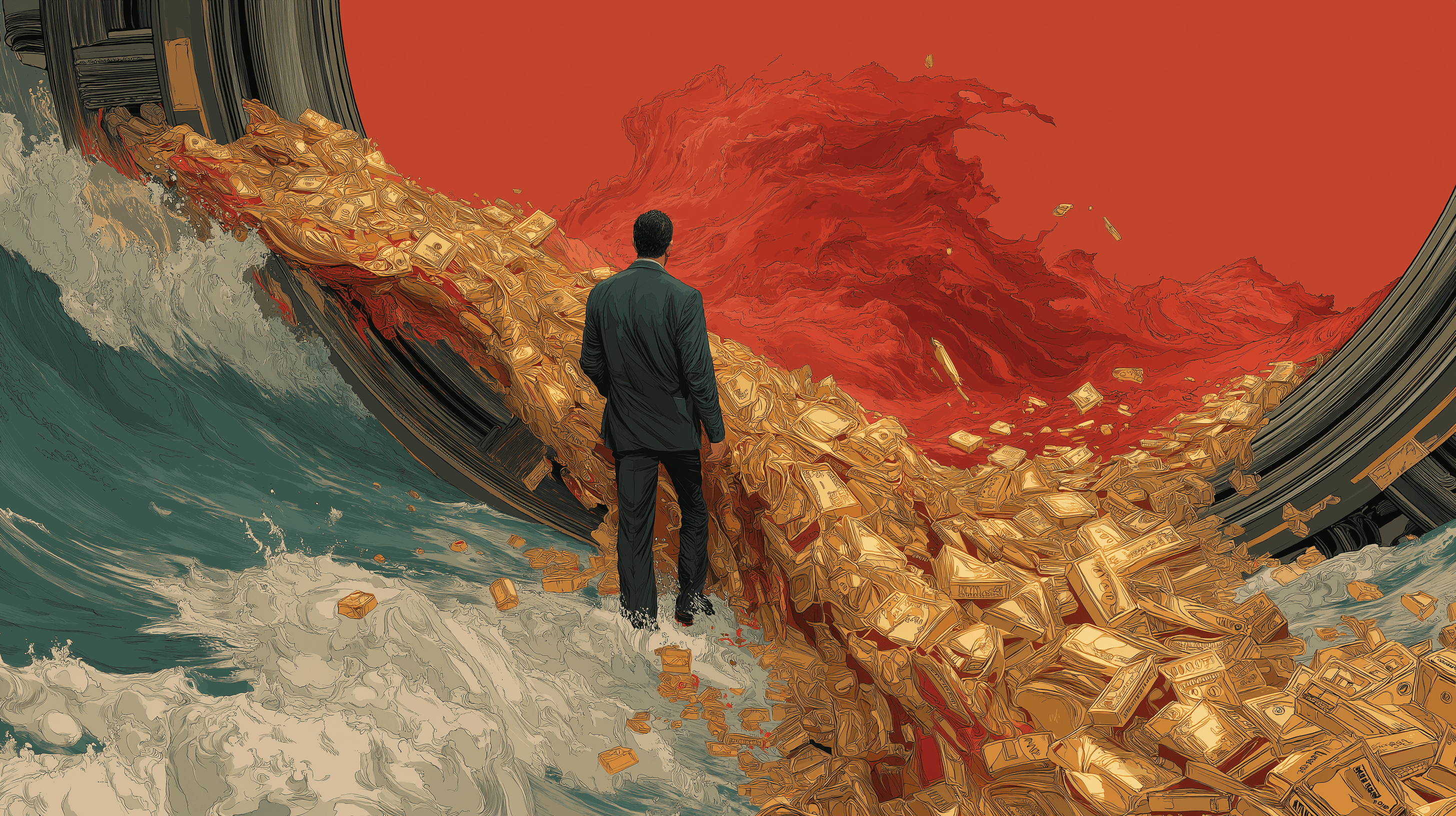
What a year this has been - we’ve seen gold and silver break records, central banks double down on dedollarisation, and retail investors flood the market like never before. Whether you were stacking bars, watching currencies swing, or simply trying to make sense of it all, 2025 delivered plenty to digest. Here's our sharp take on the key developments that shaped the physical bullion market for Kiwi and Aussie investors.
📈 Gold Hits US$4,300 and Records in NZD/AUD Too: Gold soared over 50% in USD terms this year, closing around US$4,200 after peaking at US$4,300. In NZD and AUD, gold smashed records too — despite stronger home currencies taking a little edge off the returns.
🥈 Silver Steals the Show, Breaks 45-Year High: Silver nearly doubled at one point, breaking above US$54 and ending the year up 70%. Industrial demand plus investor frenzy made 2025 silver’s strongest run in decades.
💵 Stronger Kiwi and Aussie Dollars Blunted Local Gains: The NZD and AUD strengthened 5 - 10% vs the USD, slightly cushioning bullion returns for local investors. Still, gold hit around NZ$7,500/oz and A$4,300/oz - stellar outcomes by any measure.
🏦 Central Banks Keep Buying and Ditching Dollars: Gold demand from central banks remained red-hot. Poland, China, and others kept adding tonnes to reserves. The dedollarisation trend kept official gold buying relentless and deeply strategic.
📉 Inflation Stayed Stubborn, Real Rates Stayed Low: Sticky inflation in NZ and Australia (4 - 6%) meant real interest rates remained low or negative. That’s been great for gold and part of why investors rushed into bullion all year.
🪙 Retail Buying Frenzy: Queues, Stockouts, FOMO: We saw modern-day gold rush scenes in Sydney and strong demand here in NZ too. Queues out the door, stockouts, and FOMO gripped new and seasoned buyers alike.
📦 Physical Tightness Strains Supply Chains: Coin and bar shortages were real. Premiums climbed, delivery delays grew, and silver supply deficits persisted. Holding the metal became very different from just owning paper exposure.
📉 USD Loses Steam Helping Precious Metals: The US dollar index softened this year, boosting gold and silver globally. A weaker greenback added tailwinds to bullion demand across the board.
🧭 “Higher for Longer” vs Pivot Talk Drove Volatility: Central banks talked tough on rates, but recession fears crept in. The tension between staying restrictive or cutting rates kept markets on edge and gold well supported.
🛡️ Geopolitical Shocks Sparked Safe-Haven Buying: From Ukraine to the Middle East, each crisis pushed gold up sharply. While some moves faded, the underlying global instability kept a steady safe-haven bid under prices.
📊 Basel III Quietly Boosted Gold’s Credibility: Regulatory shifts made it more appealing for banks and funds to hold physical gold. Basel III tilted the scales away from paper gold, reinforcing gold’s role as a trusted institutional asset.
🔋 Silver’s Industrial Pull Adds Long-Term Firepower: Silver wasn’t just a monetary play demand from solar, EVs, and electronics added serious muscle. With supply tight, silver earned its “critical mineral” badge in 2025.
🇦🇺🇳🇿 Local Sentiment Shifted, Vaulting and Access in Focus: More NZ and Aussie investors sought direct ownership, secure vaulting, and long-term wealth preservation. The mindset shifted from speculative to strategic.
Looking Ahead to 2026
We’re proud to have navigated this dynamic year with you. From guiding new investors to supporting seasoned stackers, it’s been our privilege to serve you. In 2026 and beyond, we look forward to continuing that mission — with clarity, conviction, and commitment to real value.
2025 Physical Bullion Market Wrap - Insights for NZ and Australian Investors
Gold and silver deliver record-breaking gains in 2025: This year saw gold and silver prices surge to all-time highs, outpacing most other assets. Gold rallied over 50% in USD terms to around US$4,200/oz by year-end, with an intraday peak in October above US$4,300. Silver was even more explosive – nearly doubling at one point and breaking its 45-year record by hitting the mid-$50s per ounce. The rally wasn’t a straight line, though: volatility spiked, including a single-day $200 plunge after the peak, but both metals still ended the year dramatically higher (gold up about 55% and silver around 70% in USD).
Currency Strength and Local Returns
Kiwi and Aussie currencies cushion local bullion prices: For New Zealand and Australian investors, exchange rates played a big role in 2025 returns. The NZ dollar and Aussie dollar strengthened against the US dollar (roughly 5–10% higher than a year ago), which slightly tempered the local price of bullion. Gold still notched record highs in NZD and AUD – near NZ$7,500/oz and A$4,300/oz respectively – but those local gains were closer to 40% after accounting for currency moves. A stronger home currency gave Kiwi and Aussie buyers a bit of a “discount” on the global gold surge, though many still saw hefty profits and protection from any further Kiwi/Aussie dollar weakness. In short, the Pacific currencies’ rise took a little edge off the bullion boom, but gold and silver remained standout performers in both NZD and AUD terms.
Central Banks Drive Global Gold Demand
Central banks supercharge gold demand in a dedollarisation drive: Official sector buying remained a cornerstone of the gold market in 2025. Central banks around the world added hundreds of tonnes of gold to their reserves (estimates exceed 600t for the year), extending the record buying spree of the past two years. Notably, countries like Poland (adding over 80 tonnes), Kazakhstan (~41t) and China (~25t officially) were among the big buyers, while others such as Brazil resumed purchases after long pauses. This accumulation is part of a broader “dedollarisation” trend – emerging economies in particular are diversifying away from USD assets and into gold. In fact, for the first time since 1996, central banks’ total gold holdings now reportedly exceed their US Treasury holdings, a symbolic shift in global reserves. Driving this move are concerns about the reliability of the dollar in a changing geopolitical landscape and a desire for hard assets that aren’t tied to any one country. The constant central bank bid underpinned gold prices all year, sending a strong signal to private investors that “big money” sees strategic value in bullion.
Inflation, Real Rates and Gold’s Appeal
Inflation stays elevated, keeping real rates in check – and gold shining: Stubborn inflation was a defining macro theme in 2025 across both global and local economies. In New Zealand and Australia, consumer prices remained well above central bank targets (annual inflation hovered around 5–6% in NZ and 4% in Australia for much of the year). Globally, while inflation did moderate from the previous year’s peaks, it proved sticky in many regions, forcing central banks to maintain high interest rates. The upshot for gold? Real interest rates (nominal rates minus inflation) stayed historically low or even negative, reducing the opportunity cost of holding non-yielding assets like gold. With cash and bonds offering limited real returns, investors kept turning to gold as an inflation hedge. Every fresh uptick in CPI or jump in oil prices this year reinforced the appeal of holding some gold to preserve purchasing power. In short, as long as everyday prices were rising faster than bank deposit rates, bullion provided peace of mind – and solid returns – as a store of value.
Interest Rate Uncertainty and Market Volatility
“Higher for longer” rates versus pivot hopes – a tug-of-war that boosted bullion: 2025 was a year of mixed signals from central bankers, which ultimately worked in precious metals’ favor. On one hand, the US Federal Reserve and our local Reserve Banks (RBNZ and RBA) stressed they would keep interest rates “higher for longer” to ensure inflation is tamed. Borrowing costs in NZ and Australia sat at decade highs, and the Fed’s overnight rate hovered in restrictive territory – a scenario that could have been a headwind for gold. Yet, on the other hand, markets increasingly sniffed out a potential policy pivot. As economic growth showed signs of cooling and more recession indicators flashed (like inverted yield curves and softer job markets), traders began anticipating rate cuts on the horizon. This prospect of a Fed/RBNZ/RBA pivot – even just a pause then gradual easing – gave gold bugs optimism, because lower future rates would relieve pressure from gold. Throughout the year, each central bank meeting was a will-they-or-won’t-they drama. Hawkish talk occasionally caused gold to wobble, but as soon as data hinted at a slowdown, expectations of eventual easing pushed bullion higher. In essence, the stalemate between rate hawks and dovish dreamers created volatility but ultimately underscored gold’s role: investors piled in as insurance, figuring that if a recession hit and banks blinked on policy, gold would be a prime beneficiary.
USD Weakness and Precious Metals Momentum
US dollar loses steam, adding tailwinds for precious metals: The mighty US dollar, which had been strong in prior years, took a breather in 2025 – a subtle but important factor for gold and silver. The US Dollar Index (DXY) drifted lower over the year, as aggressive Fed hikes gave way to a holding pattern and other currencies (like the euro and yen, plus the Kiwi and Aussie) regained some ground. A softer USD typically boosts dollar-priced commodities, and that held true: as the greenback’s exchange rate eased, gold became cheaper (and thus more attractive) for non-US investors, bolstering demand. In New Zealand, for example, a dip in the USD/NZD rate meant locals could buy more gold per Kiwi dollar – effectively a tailwind for NZD-denominated gold prices until the NZD later strengthened. Additionally, dollar weakness often signals global investors are seeking alternatives, whether due to lower US yields or confidence issues, which played into gold’s safe-haven narrative. By year’s end, the USD’s shine had dulled and this currency effect quietly helped keep bullion on an upward trajectory, especially in the fourth quarter.
Geopolitical Tension and Safe-Haven Demand
Geopolitical flare-ups spark safe-haven spikes: Throughout 2025, every time the world lurched into a new crisis, gold and silver were quick to respond. Geopolitical tensions were rife – from the ongoing war in Ukraine, to bouts of instability in the Middle East, and even political standoffs in the US and elsewhere. Each flashpoint sent a jolt of nervousness through financial markets, and investors rushed into traditional safety nets. Gold especially lived up to its “safe-haven” status during these episodes, with prices often spiking in the immediate aftermath of bad news. For instance, conflict headlines or talk of widening war would see gold jump overnight as people sought a refuge from uncertainty. However, these sharp moves weren’t always long-lived. Often, once the initial panic ebbed or the event seemed contained, gold would pare back those knee-jerk gains. Still, the accumulation of global strains – a year defined by conflicts, sanctions, and diplomatic rifts – kept a constant undercurrent of demand for bullion. Unlike a one-off spike, this persistent climate of uncertainty drove a more sustained flow of money into gold and silver as many investors decided to “buy insurance” for whatever may come next. In summary, short-term crises made for quick price pops, but the broader geopolitical malaise of 2025 firmly entrenched precious metals in portfolios for the long haul.
Retail FOMO and the Modern Gold Rush
Retail FOMO fuels a modern gold rush in Australia (and New Zealand too): One of the most striking developments this year was the surge in everyday investors scrambling to get their hands on physical bullion. In Australia, headlines were made when hundreds of people queued for hours outside a major Sydney gold dealer, creating scenes reminiscent of a gold rush. The store had to extend trading hours and bring on extra staff as about 1,000 customers a day streamed in, eager to convert cash to gold bars and coins. This retail frenzy was driven by a mix of FOMO (fear of missing out on rising prices) and a growing distrust of keeping wealth in banks or volatile stocks. Shoppers ranged from seasoned investors to ordinary folks who’d never bought precious metals before – all suddenly worried they needed “something real” in their hands. Tales of mints running out of popular coins and websites with weeks-long delivery delays only stoked the panic-buying. Interestingly, a similar (if smaller-scale) spike hit New Zealand: local bullion dealers reported a flood of inquiries and brisk sales, with some popular items selling out and waitlists forming. Many Kiwis and Aussies were inspired by central banks (“if big institutions are buying gold, maybe I should too!”) and by headlines of currency “debasement” – essentially mimicking the moves of what they perceived as the smart money. Ironically, such buying euphoria can mark short-term tops – and indeed, right after the Sydney queues made news, gold’s price did pull back sharply. But that hasn’t deterred the true believers. By year’s end, physical demand from retail investors remained strong, solidifying a generational shift in how people view hard assets versus paper wealth.
Physical Supply Squeeze and Market Tightness
Supply squeeze hits the physical bullion market: 2025 reminded us that price isn’t the only story – availability of metal in hand became a challenge at times. As investor demand skyrocketed, the supply chain for coins and bars got stressed. Dealers across the globe (including NZ and Australia) saw inventories shrink and wait times lengthen for certain products. Premiums – the extra cost over the spot price to buy physical – climbed notably for popular items like Silver Eagles, Maples, and sovereign coins, especially during the height of the rush. In New Zealand, buyers who were used to modest premiums early in the year found it harder to source gold and silver at those “sharp” prices by year-end, as local stocks were scooped up fast. Mints and refineries struggled to keep up, with some temporarily rationing distribution of small bars and coins. Beyond the retail level, wholesale market tightness was evident too. In the silver market, an unprecedented liquidity squeeze saw lease rates (the cost to borrow physical silver) jump to record highs – a sign that big players were scrambling to find metal for immediate delivery. 2025 will likely mark the fifth consecutive annual deficit for silver supply, with an estimated ~95 million ounce shortfall as consumption (industrial + investment) outpaced mine and recycle supply. Such structural deficits, year after year, have gradually eaten into above-ground inventories, contributing to the kind of strain we saw. All these factors meant that owning physical bullion often came with a waitlist or a higher price tag beyond spot – a real-world reminder that in a true crunch, holding the metal is very different from just holding a piece of paper.
Basel III and Gold’s Institutional Renaissance
Basel III quietly boosts gold’s status among banks and institutions: This year also saw regulatory winds blowing in gold’s favor, albeit quietly in the background. Under the post-crisis Basel III banking rules, which fully came into force across regions by 2025, gold’s treatment in financial balance sheets became more favorable. While gold isn’t officially labeled a “High Quality Liquid Asset (HQLA) Tier-1” on par with cash or government bonds yet, the new regulations (especially the Net Stable Funding Ratio requirement) discourage banks from relying on short-term funding for gold positions. In practice, this means banks find it more expensive to deal in unallocated (paper) gold and relatively more attractive to hold fully allocated, physical gold on their books. We’ve essentially seen a creeping reclassification of gold as a core asset – it already carries a 0% risk-weighting for capital purposes, and many in the industry speculate that formal HQLA status could be a next step in coming years. The anticipation of that, and the general Basel III push for sturdier balance sheets, led to increased interest in bullion from institutional players. Some banks have reportedly upped their gold holdings or launched products to capitalize on the new rules. Likewise, fund managers noted that gold’s newfound regulatory shine makes it easier to justify as a strategic reserve asset. The bottom line is that regulatory shifts removed a few hurdles for big-money ownership of gold. This “official” nod of approval helped demand in a subtle way, reinforcing gold’s renaissance as a trusted asset in the eyes of not just central bankers but private banks and perhaps even future banking regulations.
Silver’s Dual Role and Standout Performance
Silver steals the show with its dual role – industrial metal turned investment superstar: Often called “poor man’s gold,” silver definitely didn’t play second fiddle in 2025. In fact, silver’s performance outpaced gold’s, and it did so riding on two engines. First, silver benefited from the same monetary and safe-haven drivers pushing gold – investors poured in, looking for a cheaper way to hedge inflation and turmoil. This wave of investment demand (from coins to large exchange-traded products) was so strong that silver prices blasted to record levels, reaching about US$54/oz in October and still hovering in the high-$40s at year-end. But silver is also a critical industrial commodity, and that side of the equation added intrigue. Demand from high-tech and green industries continued to grow: 2025 saw record solar panel installations globally (solar power uses a significant amount of silver, though each panel’s silver content is gradually being reduced), and further expansion of the electric vehicle and semiconductor markets, all of which rely on silver. Supply struggled to keep up with these needs – mining output was flat and scrap supply only inched up, so the market logged another year of deficit. High prices did cause some belt-tightening in industry (for example, manufacturers thrifted the amount of silver in electronics where they could), but not enough to flip the supply/demand balance. Importantly, silver’s gold-like appeal also seemed to broaden this year: as it became clear that silver’s supply chain was strained and it has strategic importance (the US even labeled silver a “critical mineral” in 2025), more investors treated it not just as a speculation, but as a long-term hold. By playing both a monetary hedge and a key input for future technologies, silver affirmed its unique dual role. The result: an asset that not only protected wealth in uncertain times but is also poised to benefit from any pickup in industrial activity – a one-two punch that made 2025 a banner year for silver enthusiasts.
What 2025 Means for Gold and Silver Investors
2025 was a defining year for precious metals. Record gold prices, a historic surge in silver, ongoing central bank gold buying, and tightening physical bullion supply all reinforced one message: demand for real assets is rising, and investors across New Zealand and Australia are paying attention. Whether you’re exploring gold investing in NZ, comparing silver vs gold performance, or looking to secure physical bullion for long-term stability, the shifts we’ve seen this year highlight why gold and silver continue to play such a crucial role in wealth protection.
As we move into 2026, factors like inflation, USD weakness, geopolitical uncertainty, and growing interest in physical gold storage will remain key drivers to watch. For investors considering when and how to buy gold or silver, staying informed is everything. If you’d like to stay ahead of these shifts, make sure you’re signed up to our emails for ongoing market insights.