New Zealand's Premier Gold & Silver Dealer — Shipping Fast to Sydney, Melbourne, and Across Australia


'%3e%3cpath%20d='M35.9662%2018.6756C35.9662%2028.4318%2028.0577%2036.4142%2018.2276%2036.4142C8.47382%2036.4142%200.491455%2028.4318%200.491455%2018.6756C0.491455%208.84547%208.47382%200.937012%2018.2276%200.937012C28.0577%200.937012%2035.9662%208.84547%2035.9662%2018.6756Z'%20fill='%234E4E4E'/%3e%3cpath%20d='M28.5611%2013.6174C28.3197%2012.7144%2027.6084%2012.003%2026.7052%2011.7616C25.0681%2011.323%2018.5034%2011.323%2018.5034%2011.323C18.5034%2011.323%2011.9389%2011.323%2010.3018%2011.7616C9.39859%2012.003%208.68734%2012.7144%208.44594%2013.6174C8.0072%2015.2547%208.0072%2018.6703%208.0072%2018.6703C8.0072%2018.6703%208.0072%2022.086%208.44594%2023.7231C8.68734%2024.6262%209.39859%2025.3378%2010.3018%2025.579C11.9389%2026.0177%2018.5034%2026.0177%2018.5034%2026.0177C18.5034%2026.0177%2025.0681%2026.0177%2026.7052%2025.579C27.6084%2025.3378%2028.3197%2024.6262%2028.5611%2023.7231C28.9998%2022.086%2028.9998%2018.6703%2028.9998%2018.6703C28.9998%2018.6703%2028.9998%2015.2547%2028.5611%2013.6174Z'%20fill='%23E2D0A9'/%3e%3cpath%20d='M16.0072%2021.323L21.0072%2018.3232L16.0072%2015.323V21.323Z'%20fill='%234E4E4E'/%3e%3c/g%3e%3cdefs%3e%3cclipPath%20id='clip0_1338_5546'%3e%3crect%20width='37'%20height='37'%20fill='white'%20transform='translate(0.00720215%200.322998)'/%3e%3c/clipPath%3e%3c/defs%3e%3c/svg%3e)
;}%3c/style%3e%3cclipPath%20id='b'%3e%3crect%20class='c'%20width='37'%20height='37'/%3e%3c/clipPath%3e%3c/defs%3e%3cg%20class='f'%3e%3cpath%20class='d'%20d='M36.23,18.35c0,9.75-7.91,17.74-17.74,17.74S.75,28.11.75,18.35,8.73.61,18.49.61s17.74,7.91,17.74,17.74Z'/%3e%3cpath%20class='e'%20d='M25.53,12.76c-2-.43-3.49-2.11-3.68-4.15v-.43h-3.36v13.35c0,1.56-1.28,2.82-2.84,2.82-.88,0-1.71-.42-2.24-1.12h0s0,0,0,0c-.94-1.24-.7-3.02.54-3.96.73-.56,1.69-.72,2.57-.44v-3.42c-3.38-.47-6.5,1.9-6.97,5.28-.26,1.89.37,3.8,1.7,5.17,2.39,2.44,6.3,2.49,8.74.1,1.19-1.16,1.86-2.76,1.86-4.42v-6.82c1.36.97,2.99,1.49,4.66,1.49v-3.34c-.33,0-.66-.03-.98-.1Z'/%3e%3c/g%3e%3c/svg%3e)
'%3e%3cpath%20fill-rule='evenodd'%20clip-rule='evenodd'%20d='M36.0997%2018.6758C36.0997%2028.4296%2028.1913%2036.4144%2018.3611%2036.4144C8.53345%2036.4144%200.625%2028.4296%200.625%2018.6758C0.625%208.84571%208.53345%200.937256%2018.3611%200.937256C28.1913%200.937256%2036.0997%208.84571%2036.0997%2018.6758Z'%20fill='%234E4E4E'/%3e%3cpath%20fill-rule='evenodd'%20clip-rule='evenodd'%20d='M22.5741%2010.25H19.9158C17.6984%2010.25%2016.0699%2012.0978%2016.0699%2014.4629V16.089H13.2638V18.8237H16.0699V27.0277H19.2481V18.8237H22.5741V16.089H19.2481V14.1673C19.2481%2013.576%2019.6201%2013.1325%2019.9158%2013.1325H22.5741V10.25Z'%20fill='%23E2D0A9'/%3e%3c/g%3e%3cdefs%3e%3cclipPath%20id='clip0_1338_5538'%3e%3crect%20width='37'%20height='37'%20fill='white'%20transform='translate(0.00720215%200.322998)'/%3e%3c/clipPath%3e%3c/defs%3e%3c/svg%3e)
'%3e%3cpath%20fill-rule='evenodd'%20clip-rule='evenodd'%20d='M36.2344%2018.6756C36.2344%2028.4294%2028.3259%2036.4142%2018.4933%2036.4142C8.73957%2036.4142%200.757202%2028.4294%200.757202%2018.6756C0.757202%208.84547%208.73957%200.937012%2018.4933%200.937012C28.3259%200.937012%2036.2344%208.84547%2036.2344%2018.6756Z'%20fill='%234E4E4E'/%3e%3cpath%20fill-rule='evenodd'%20clip-rule='evenodd'%20d='M26.3155%209.78467C26.6931%209.78467%2027.0278%209.91374%2027.3195%2010.1719C27.6113%2010.4301%2027.7572%2010.7484%2027.7572%2011.1271V27.4423C27.7572%2027.8209%2027.6113%2028.1393%2027.3195%2028.3974C27.0278%2028.6556%2026.6931%2028.7847%2026.3155%2028.7847H10.1474C9.76985%2028.7847%209.44374%2028.6556%209.16913%2028.3974C8.89451%2028.1393%208.7572%2027.8209%208.7572%2027.4423V11.1271C8.7572%2010.7484%208.89451%2010.4301%209.16913%2010.1719C9.44374%209.91374%209.76985%209.78467%2010.1474%209.78467H26.3155ZM14.2989%2025.618V16.9097H11.9239V25.618H14.2989ZM12.7155%2015.3263C13.1444%2015.3263%2013.5154%2015.1697%2013.8288%2014.8563C14.1422%2014.5429%2014.2989%2014.1718%2014.2989%2013.743C14.2989%2013.3142%2014.1422%2012.9431%2013.8288%2012.6297C13.5154%2012.3164%2013.1444%2012.1597%2012.7155%2012.1597C12.2867%2012.1597%2011.9156%2012.3164%2011.6023%2012.6297C11.2889%2012.9431%2011.1322%2013.3142%2011.1322%2013.743C11.1322%2014.2048%2011.2806%2014.5841%2011.5775%2014.881C11.8744%2015.1779%2012.2537%2015.3263%2012.7155%2015.3263ZM24.5905%2025.618V20.9252C24.5905%2019.635%2024.36%2018.6433%2023.899%2017.9498C23.438%2017.2564%2022.5586%2016.9097%2021.2609%2016.9097C19.9632%2016.9097%2019.0753%2017.3612%2018.5972%2018.2643H18.5459V17.1032H15.8822V25.618H18.6484V21.409C18.6484%2019.9576%2019.2119%2019.2319%2020.3388%2019.2319C20.7828%2019.2319%2021.1157%2019.369%2021.3377%2019.6431C21.5597%2019.9173%2021.6878%2020.1753%2021.7219%2020.4172C21.7561%2020.6591%2021.7731%2021.0058%2021.7731%2021.4574V25.618H24.5905Z'%20fill='%23E2D0A9'/%3e%3c/g%3e%3cdefs%3e%3cclipPath%20id='clip0_1338_5530'%3e%3crect%20width='37'%20height='37'%20fill='white'%20transform='translate(0.00720215%200.322998)'/%3e%3c/clipPath%3e%3c/defs%3e%3c/svg%3e)




CIT Liechtenstein Coin Design: Innovation in Modern Gold and Silver Coins
Innovation Meets Craftsmanship: How CIT Liechtenstein Is Redefining Modern Coin Design
The global precious metals market is navigating an unusual mix of volatility, innovation, and renewed interest in physical ownership. While gold and silver remain pillars of long-term wealth preservation, collectors and investors alike are paying closer attention to how and where coins are produced. Design integrity, limited mintages, and technological advancement now matter as much as metal content.
At the recent World Money Fair in Berlin, Rich from MyGold had the opportunity to speak directly with CIT Coin Invest Liechtenstein, a mint that exemplifies how creativity, heritage, and precision manufacturing can coexist in the modern precious metals landscape. What emerged was a clear picture of why CIT has become one of the most respected names in contemporary coin design worldwide.
A Global Mint from an Unexpected Place
Liechtenstein may not be the first country that comes to mind when discussing global leaders in coin production. Yet CIT has quietly built an international reputation over more than 50 years, developing and issuing coins for national banks and major dealers across the world.
Despite being a relatively small, family-run business, CIT produces more than 300 distinct coin designs each year. Their reach extends far beyond their borders, with CIT-designed coins appearing in collections across Europe, Asia, and the Americas. This scale is not driven by mass production, but by precision, creativity, and carefully controlled mintages.
The Tiffany Art Series and the Power of Concept
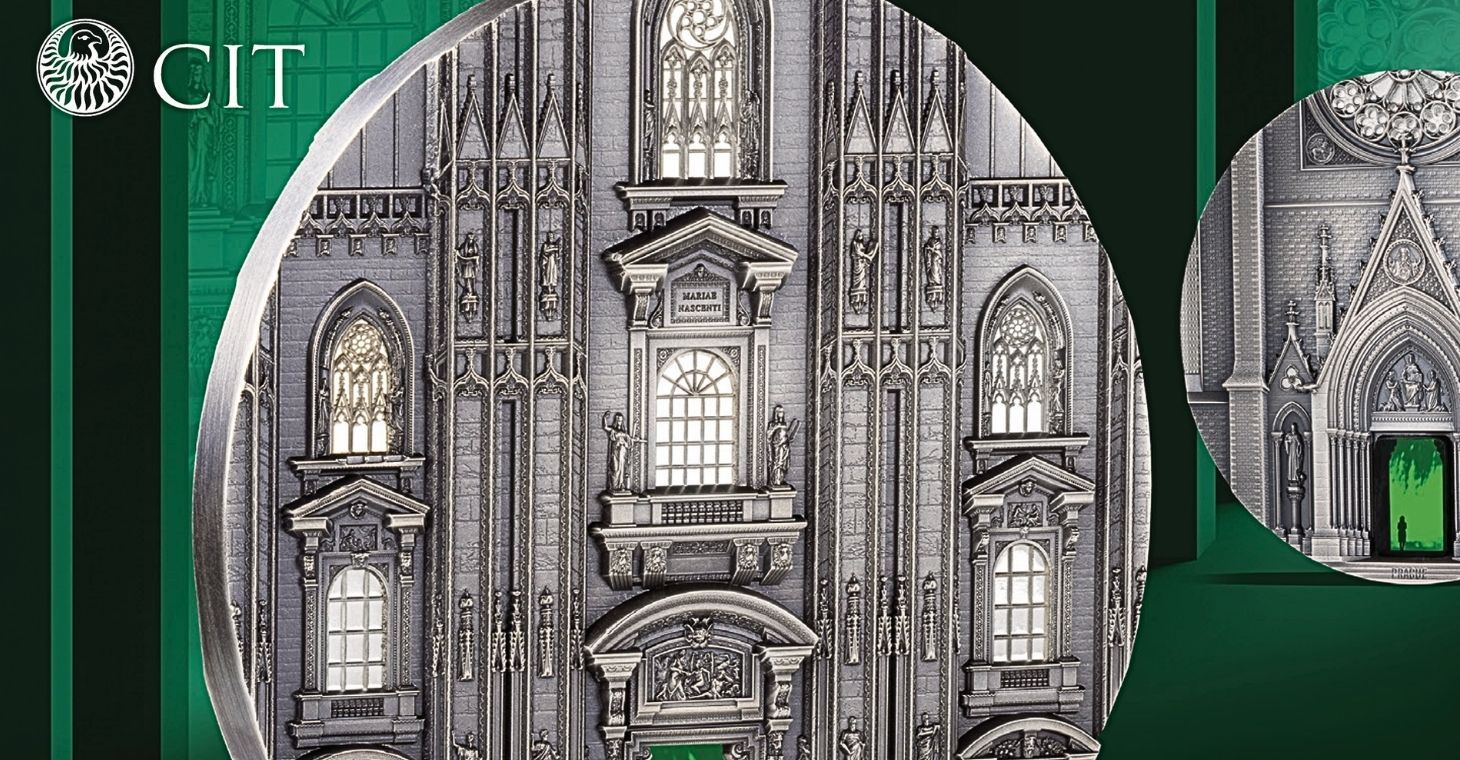
One of CIT’s most iconic contributions to modern numismatics is the Tiffany Art Metropolis series. First launched in 2004, the concept began with a simple yet radical idea: embedding genuine Tiffany glass into a silver coin. What followed was a series that has now spanned two decades, consistently selling out and earning global recognition.
The latest chapter in this series, titled Portals, reflects CIT’s ability to merge symbolism, architecture, and material innovation. Featuring famous structures such as the Milan Cathedral and historic churches in Prague, the design uses Tiffany glass as a visual and conceptual bridge between cultures, beliefs, and eras. Each coin is antique-finished, adding depth and permanence to the design.
This approach highlights a key difference between CIT and traditional bullion-focused mints. While metal purity remains essential, CIT places equal importance on narrative, artistic expression, and the emotional connection collectors form with a piece.
Where Art Meets Technology
Transforming ambitious concepts into physical coins is not a straightforward process. CIT works closely with long-term production partners to push the technical boundaries of what is possible in minting. Some designs are simply ahead of their time, requiring years of advancements before they can be realised.
Rather than limiting creativity at the idea stage, CIT encourages designers to think freely first. Practical constraints such as cost, complexity, and production feasibility are addressed later. This philosophy allows innovation to lead, while commercial considerations follow.
The result is a catalogue of coins that consistently introduce new techniques, materials, and finishes, setting benchmarks for the wider industry.
Limited Mintages and Collector Responsibility
A defining feature of CIT’s approach is its commitment to low mintages. Unlike mass-issued bullion products, CIT coins are produced in tightly controlled quantities to preserve collectability and long-term value.
Determining the right mintage is both art and science. While historical data and market experience inform decisions, there is always an element of intuition. Importantly, CIT does not increase mintages once demand becomes apparent. This restraint reflects a responsibility toward collectors, ensuring that scarcity and trust are maintained.
For investors and collectors, low mintages help explain why certain modern coins appreciate over time, particularly when demand outpaces supply.
A Family Business with Global Reach
CIT’s roots as a family-run enterprise shape its culture and decision-making. The company began in the 1970s as a coin trading business before transitioning into issuing its own designs in the 1980s. Today, leadership has passed to the next generation, maintaining continuity while embracing innovation.
This structure allows for agility. Ideas can move quickly from concept to prototype without the layers of bureaucracy common in larger organisations. Decisions are often driven by curiosity, experimentation, and a willingness to try something new.
Where Coin Ideas Are Born
At CIT, creativity is not confined to a single department. Every team member is encouraged to contribute ideas, whether inspired by travel, architecture, film, or everyday observations. Monthly idea submissions are discussed internally, evaluated for artistic and commercial potential, and, when viable, developed further.
Some concepts come from aerial views of cities, others from pop culture or historical artefacts. One recent example includes a coin featuring a fragment of a genuine dinosaur tooth, estimated to be 90 million years old. This Jurassic Relics series demonstrates how CIT continues to redefine what a modern coin can represent.
Physical Gold and Silver in a Changing Market
While CIT is best known for its collector-focused designs, the broader context of precious metals investing remains central. Physical gold and silver continue to serve as tools for wealth preservation, particularly during periods of market uncertainty.
Coins with limited mintages and innovative designs occupy a unique space, combining intrinsic metal value with numismatic appeal. For investors, this can provide diversification beyond standard bullion products, while still maintaining exposure to precious metals.
What Investors Should Consider Next
Looking ahead, the next 12 to 24 months are likely to remain dynamic for precious metals. Supply constraints, evolving demand, and technological innovation will continue to shape the market. Investors should focus on quality, authenticity, and long-term relevance rather than short-term price movements.
Coins that combine credible production, controlled supply, and enduring appeal are well positioned to retain value over time.
MyGold and Access to Global Mints
At MyGold, we work closely with world-class mints and producers to bring high-quality gold and silver products to New Zealand and Australian investors and collectors. Our presence at international events such as the World Money Fair allows us to assess new releases firsthand and engage directly with the people behind them.
By offering access to globally recognised mints like CIT, MyGold helps bridge the gap between innovation and trust, ensuring customers can buy physical gold and silver in New Zealand and Australia with confidence.
A Lasting Impression
CIT Liechtenstein stands as a reminder that precious metals are not only about weight and purity. They are also about craftsmanship, imagination, and permanence. In an era where many assets are digital and fleeting, a well-designed coin remains something tangible, enduring, and deeply human.
For those looking to preserve wealth, collect meaningful pieces, or simply appreciate excellence in minting, CIT’s work demonstrates why physical gold and silver continue to matter.